 1
Product Stories
1
Product Stories
American Food History · Pennsylvania Orchard Traditions
From Orchard to Pantry The Harvest That Learned to Wait
How generations of Pennsylvania families turned the fleeting abundance of the orchard into something that could wait patiently on the pantry shelf.
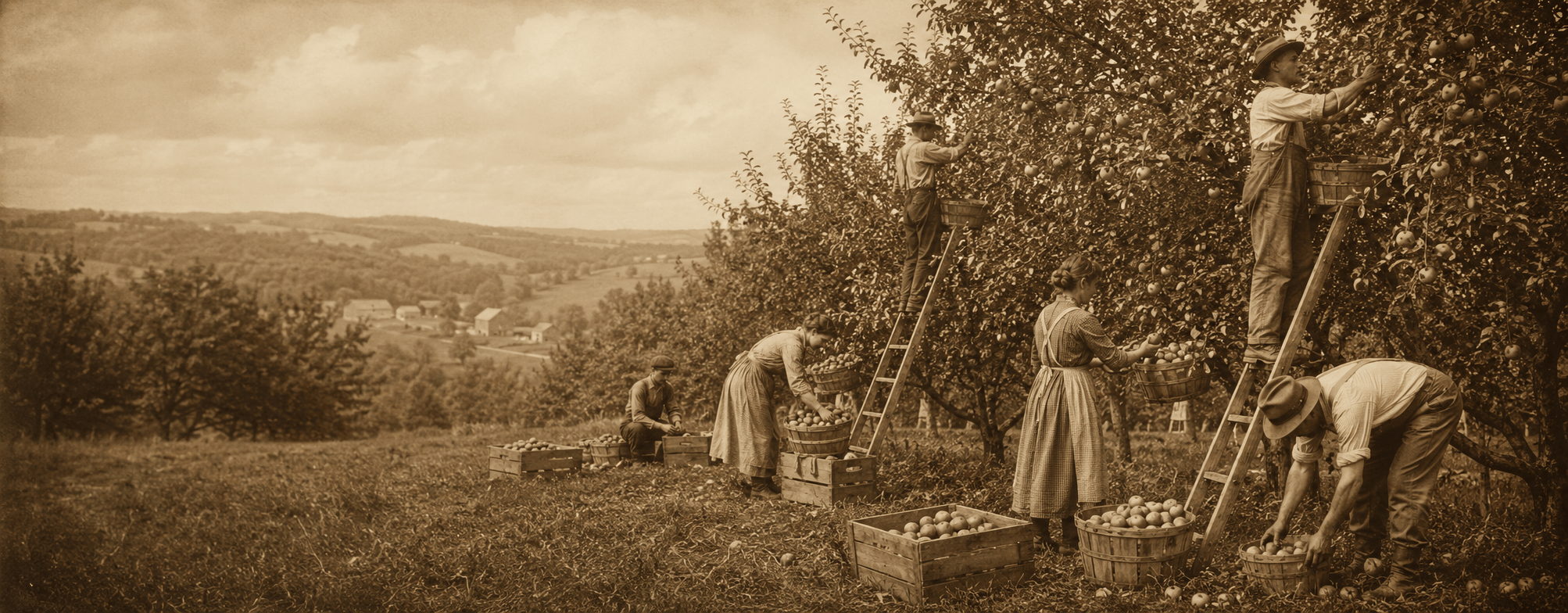
An orchard does not spread its harvest evenly across the year.
For weeks, the trees seem patient.
Then suddenly—
there are apples everywhere.
Baskets fill. Cellars fill. Kitchen tables disappear beneath piles of fruit.
And before refrigeration, supermarkets, and overnight shipping, that abundance came with a problem:
What do you do with more fruit than a family can possibly eat before it spoils?
The Orchard Was Part of the Farm
Planting for the Future
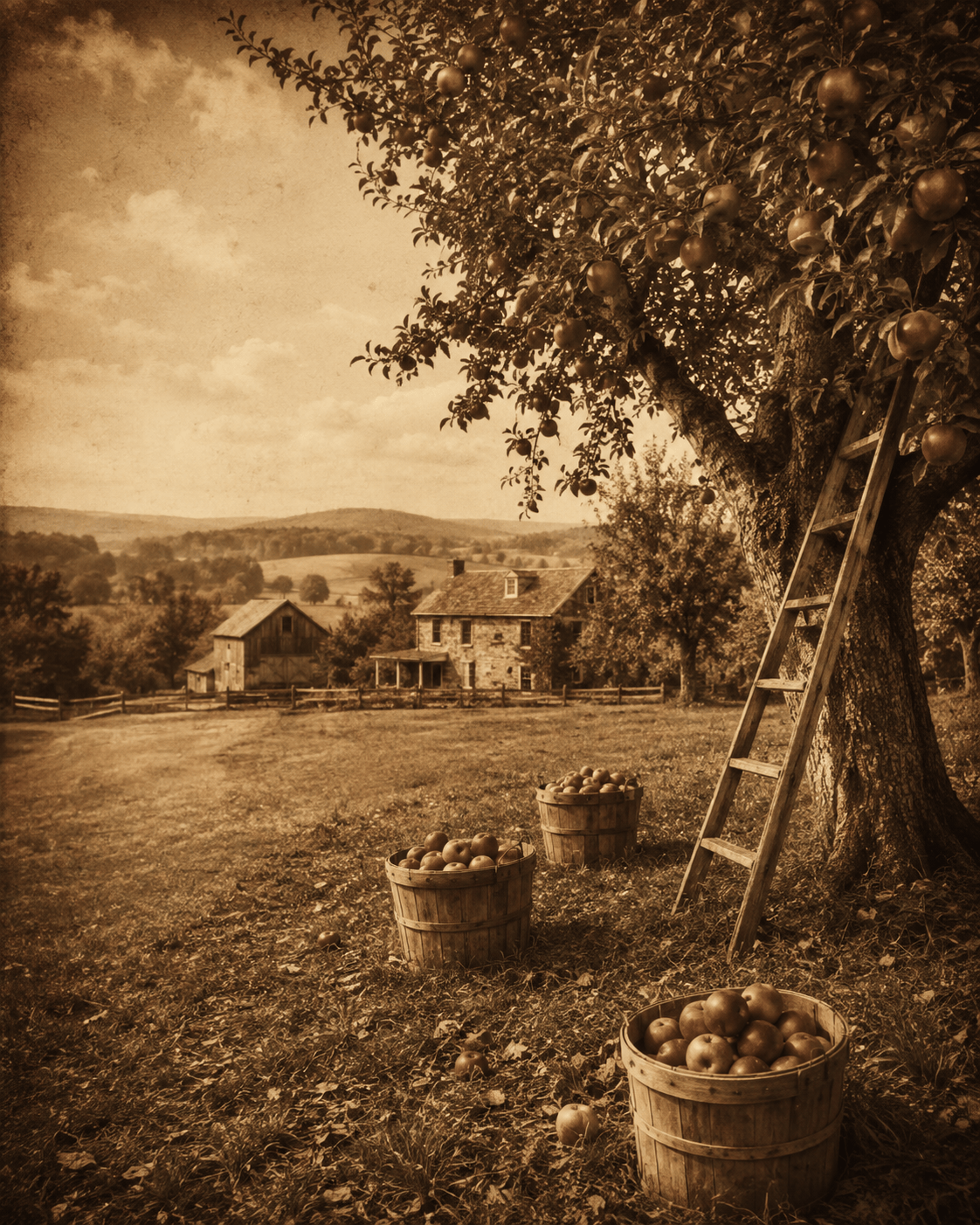
Long before “farm-to-table” became a phrase, it was simply how many Pennsylvania families ate.
A farm might contain grain fields, livestock, a kitchen garden and an orchard.
Apple trees were especially valuable.
Once established, they could produce year after year—and the harvest could become far more than fresh fruit.
The Problem With a Perfect Peach
The Harvest Does Not Wait
Fresh fruit has one inconvenient characteristic.
It does not care how much work went into growing it.
So preservation became part of orchard life.
Ways to Save the Harvest
Remove moisture so fruit can last longer.
Turn apples and other fruit into cider.
Seal seasonal fruit away for later.
Concentrate the orchard into fruit butter.

What Exactly Is Fruit Butter?
No Dairy Required
Despite the name, traditional fruit butter contains no dairy butter.
The word describes the texture.
Fruit is cooked until it breaks down, loses moisture, and becomes thick, smooth and spreadable.
Fresh fruit becomes something made for the pantry.
Fruit + Time
How the Orchard Becomes Butter
Fresh Fruit
The process begins with fruit at the center of its season.
Slow Cooking
Heat softens the fruit and begins removing moisture.
Concentration
Flavor deepens as the mixture becomes thicker.
The Pantry
The fleeting harvest becomes something that can wait.
A Pennsylvania Dutch Tradition
September, Saved for January
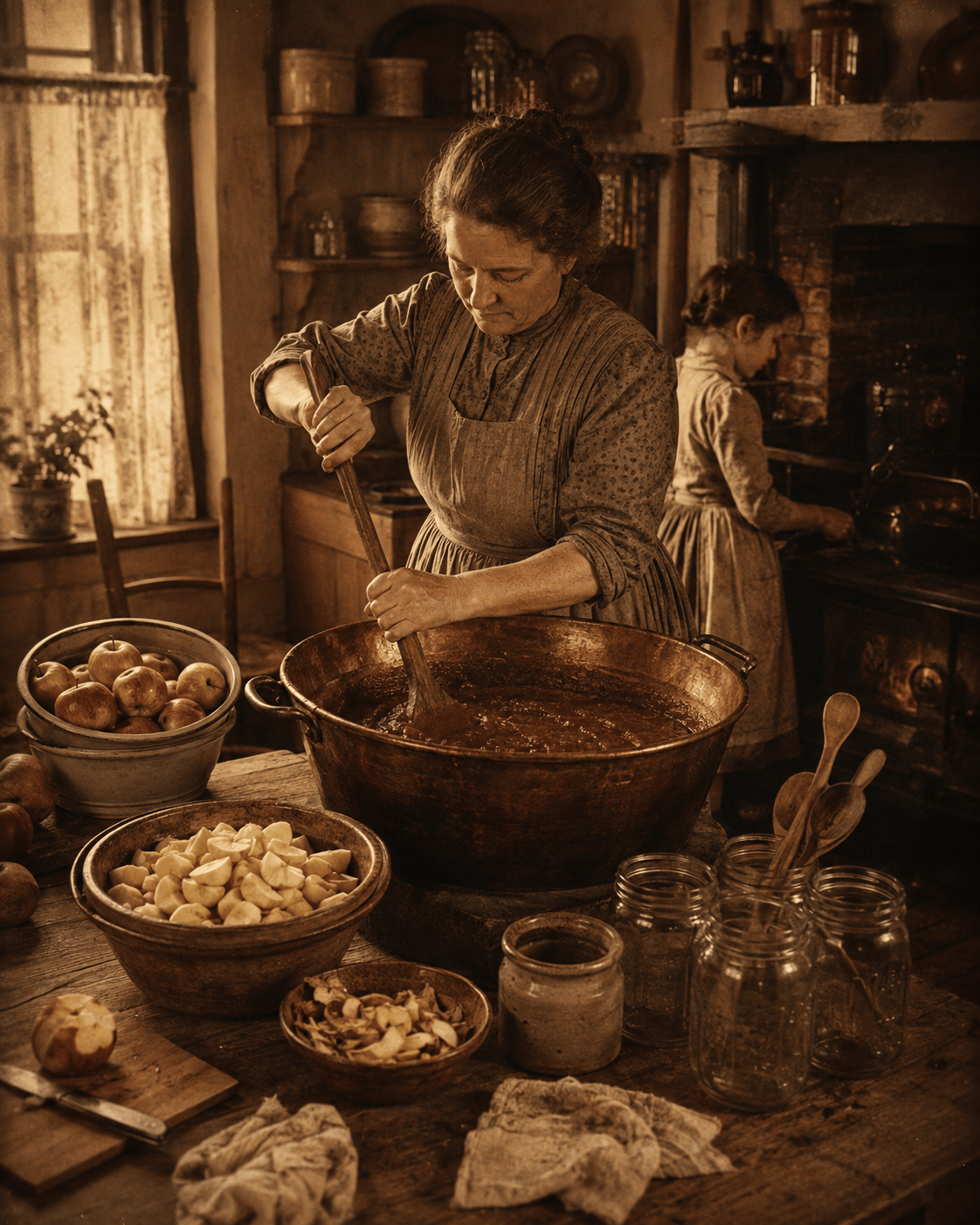
Apple butter belongs to an older preservation tradition carried into Pennsylvania by German-speaking immigrants.
Abundant Pennsylvania orchards made the practice especially useful.
Apple butter could be spread on bread, served beside a meal, spooned over pancakes, or used in baking.
The jar represented something larger than a condiment. It represented September in January.
The Kettle
Patience Was Part of the Recipe
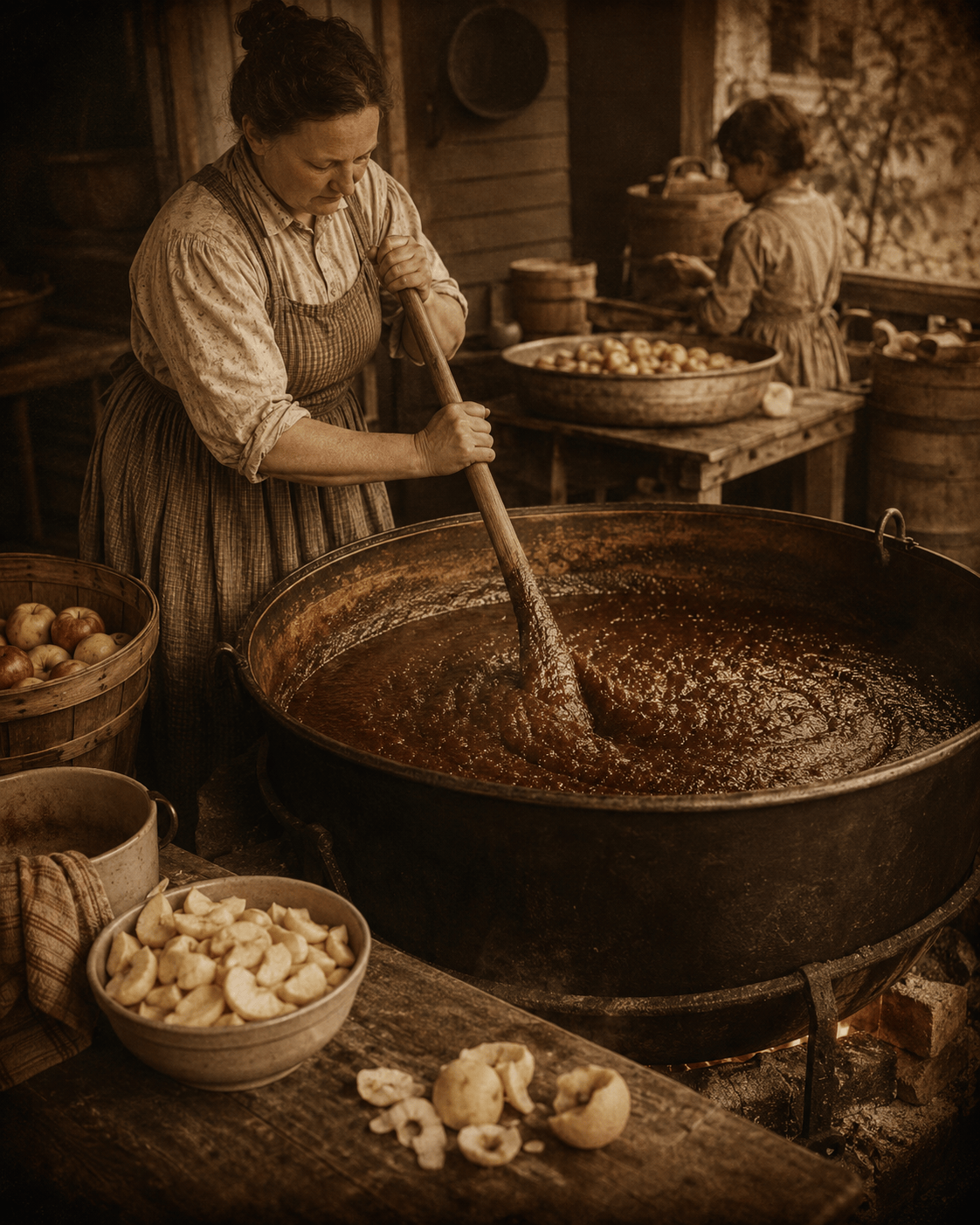
Old-fashioned apple butter required time.
Large quantities of fruit could simmer for hours.
And as the mixture thickened, it required more attention—not less.
And somebody always wanted to taste it while it was still warm.
A Cider Press in Sassamansville
The Bauman Family Story Begins
In the late nineteenth century, John Bauman operated a carriage shop in Sassamansville, Pennsylvania.
But factory-built buggies were changing the carriage trade.
So Bauman adapted.
In 1892, he purchased a cider press and began serving nearby farms.
Around the turn of the century, apple butter became another part of that evolving family business.
What looked like a small business decision became the beginning of a Pennsylvania food tradition.
From Buggy Maker to Apple Butter Maker
Tradition Meets Ingenuity
John Bauman understood machinery.
That mattered because cooking thick fruit in quantity could be hot, messy and dangerous.
He applied a machinist's thinking to a traditional kitchen problem.
A practical innovation helped control steam and dangerous splattering during production.
The Number That Explains Apple Butter
Five Pounds In.
Think about that for a moment.
Five pounds of orchard fruit.
Cooked. Reduced. Concentrated.
The jar may be small.
The harvest behind it is not.
No Butter. No Shortcut to Time.
The Fruit Creates the Texture
Fruit butter is not simply jam with a different name.
Its smooth body comes from cooking, reduction and concentration.
That is what gives the word butter its meaning.
Not because dairy has been added.
Because the fruit itself has changed.
Apple Was Only the Beginning
One Tradition. Many Harvests.
The same preserving idea can capture very different moments in the growing season.
Apple
Dark, rich, concentrated and deeply tied to Pennsylvania Dutch food traditions.
Peach
Soft summer fruit becomes warm, fragrant and deeply spreadable.
Cherry
Bright fruit flavor takes on a smoother, more concentrated character.
Strawberry
Berries and lemon preserve the feeling of early summer in a jar.
Pear
A softer orchard flavor with warm spice and old-fashioned pantry character.
Sweet Tomato
A sweet-savory reminder that pantry traditions were always about usefulness.
One Jar for Every Season
The Pantry Becomes a Calendar
Fresh fruit tells you what season it is.
Fruit butter lets you remember what season it was.
From Orchard to Pantry
Follow the Harvest
Grow
It begins in orchards, berry fields and farms.
Harvest
Fruit is picked when the season says it is ready.
Prepare
The crop is cleaned and prepared for cooking.
Cook
Slow heat breaks down the fruit.
Concentrate
Moisture leaves and flavor deepens.
Preserve
The orchard finally reaches the pantry shelf.
Why Not Just Call It Jam?
Fruit Butter Is Its Own Thing
Jam
Preserve the Fruit
Jam often celebrates pieces or character of fruit held within a gelled spread.
Fruit Butter
Transform the Fruit
Fruit butter emphasizes concentration, smooth texture and deeper cooked flavor.
Not quite applesauce. Not quite jam. Not actual butter.

The Pantry Was More Than Storage
One Season Waiting for Another
Families could not make the growing season longer.
So they found ways to make the harvest last.
That is the real story behind fruit butter.
Not simply sweetness. Time.
More Than Something for Toast
A Pantry Staple Earns Its Place
Start Simple
- Toast
- Biscuits
- Pancakes
- Waffles
Cook With It
- Glazes
- Marinades
- Baking
- Cheese pairings
Finish Sweet
- Ice cream
- Cakes
- Crumble bars
- Pastry fillings
Why This Story Belongs in the Gift
It Changes What the Jar Means
Someone sees:
And thinks:
Something to put on toast.
But tell them about the orchard.
Tell them how much fruit goes into one jar.
Tell them about Pennsylvania preserving traditions.
Tell them about a Sassamansville carriage maker who bought a cider press in 1892.
The ingredients have not changed.
The recipient has.
Taste the Story
Bring the Orchard Home
The best way to understand fruit butter is to taste how differently the same preserving tradition can express each harvest.
Apple · Pennsylvania Tradition
Bauman's Apple Butter
Dark, thick and deeply concentrated, with a story rooted in Pennsylvania orchard and preserving traditions.
Shop Apple ButterPeach · Orchard Fruit
Bauman's Peach Butter
Ripe peach flavor preserved beyond the short summer harvest.
Shop Peach ButterStrawberry · Summer Harvest
Bauman's Strawberry Butter
A bright berry expression of the same old pantry idea.
Shop Strawberry ButterTomato · Sweet & Savory
Bauman's Sweet Tomato Butter
A sweet-savory pantry spread that shows how versatile an old preserving tradition can become.
Shop Sweet Tomato ButterMake It a Gift Experience
Taste Two Seasons Side by Side
Pair two contrasting fruit butters and let the recipient taste the story for themselves.
One jar says tradition.
The other says: look what else you can do with it.
Two contrasting fruit butters
History of orchard preservation
Bauman's 1892 story card
Breakfast recipe
Unexpected savory recipe
Custom occasion story
A Jar Full of September
The Harvest Does Not Have to Disappear
Today, we can buy fruit long after its traditional season has passed.
But there is still something satisfying about a jar that began with fruit that had a season, a place and a harvest.
And a place on the pantry shelf.
The orchard gives us the harvest.
The pantry teaches us how to keep it.