 Product Stories
American Food History · Philadelphia & New York
The Horn & Hardart Automat When Lunch Came Through a Little Glass Door
For generations of city diners, lunch began with a handful of nickels, a wall of little glass doors, and a decision.
For generations of city diners, lunch did not begin with a waiter or a menu.
It began with a handful of nickels, a wall of little glass doors, and a decision.
Chicken pie? Baked beans? A sandwich? A slice of pie? Coffee?
Drop the coins into the slot. Turn the knob. Open the door.
Lunch was waiting on the other side.
Horn & Hardart transformed that simple ritual into one of the most recognizable dining experiences of twentieth-century America.
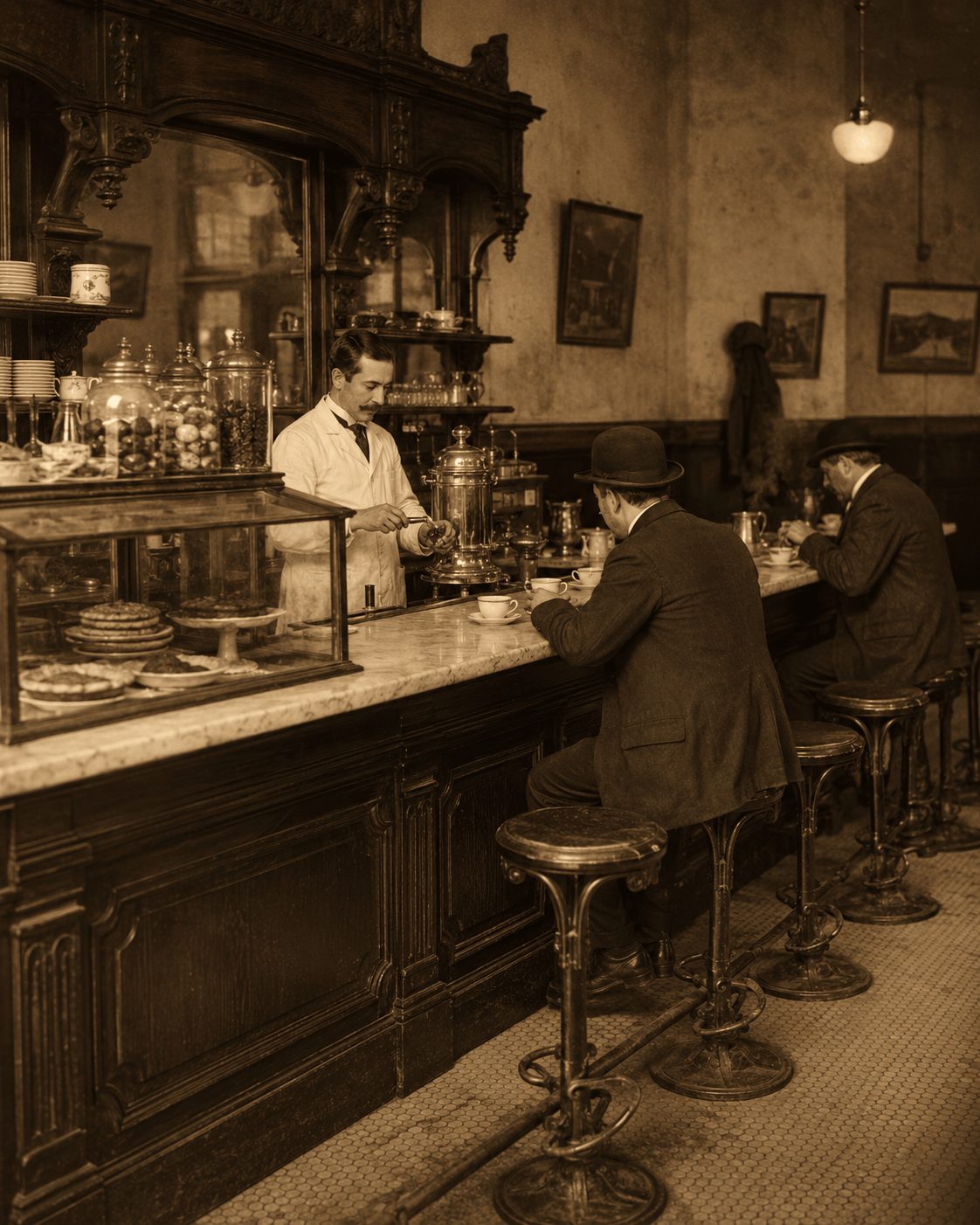
Before the Little Glass Doors
The Story Began With Coffee
Joseph Horn and Frank Hardart became business partners in Philadelphia in the late nineteenth century.
By 1888, they were operating luncheonettes and bakeries in Center City Philadelphia.
Their restaurants were built around a straightforward idea:
And serve very good coffee.
Coffee would remain at the heart of Horn & Hardart for generations.
Philadelphia Meets the Automat
The Future of Lunch Arrives
On June 9, 1902, Horn & Hardart opened its first Automat at 818 Chestnut Street in Philadelphia.
The concept had European roots, but the American version became something larger, more polished, and far more ambitious.
Customers entered a dining room filled with marble, mirrors, glass and polished metal.
And stretching across the room were rows upon rows of small food compartments.
Behind each little glass door was something to eat.
How the Automat Worked
Lunch, One Little Door at a Time
The experience was part restaurant, part machine, and part theater.
Get Your Nickels
Customers exchanged larger coins or bills for the nickels needed to operate the machines.
Look Through the Glass
Sandwiches, desserts, salads and prepared dishes sat behind individual glass doors.
Insert the Coins
Place the required coins in the slot and turn the chrome-plated knob.
Open the Door
The glass compartment opened and lunch was yours.
The Secret Behind the Machine
The Automat Was Never Really Automatic
Behind that impressive wall was a kitchen full of people.
As soon as a customer removed a plate, someone on the other side replaced it with another.
The glass compartments hid an enormous amount of cooking, baking, replenishing, cleaning and organization.
The customer saw a little door.
Behind it was an entire restaurant.
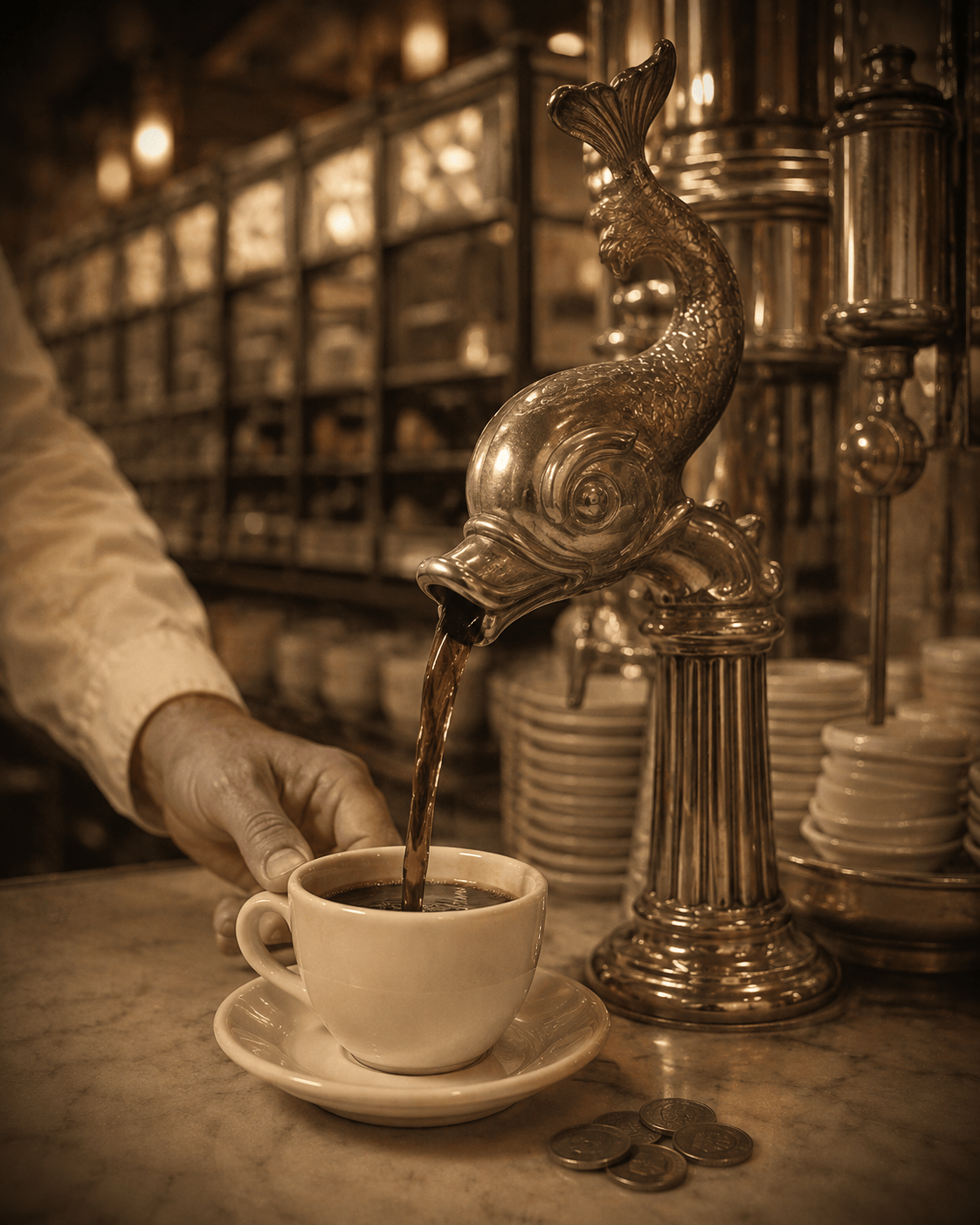
The Most Important Machine Had No Door
The Coffee Fountain
For all the fascination surrounding the glass compartments, one of Horn & Hardart’s most famous products came from somewhere else.
The coffee fountain.
Coffee poured through ornate metal spouts shaped like dolphin heads.
That bit of theater helped turn something ordinary into part of the Automat experience.
Coffee Worth Coming Back For
Freshness Was Taken Seriously
Horn & Hardart treated coffee as more than an afterthought.
Batches were monitored for freshness. Quality was checked regularly.
And customers ordered enormous quantities of it.
cups of coffee served annually
The Automat was about speed—but it was not always about leaving quickly.

A Restaurant for Almost Everybody
Everybody Shared the Same Room
The person sitting beside you might be a secretary on her lunch break.
Or a factory worker. A salesman. A student. An actor. A banker. A police officer.
You did not need reservations.
You needed coins—and an empty chair.
The Automat made lunch fast.
The tables made it social.
A Little Independence Behind Every Door
The Pleasure of Choosing for Yourself
Children Could Choose
The windows turned lunch into something visual and surprisingly entertaining.
Workers Could Eat Quickly
A short lunch break did not have to be spent waiting for table service.
Dining Alone Felt Normal
Solo diners could quietly choose a meal and find a seat without ceremony.
You Controlled the Cost
Customers decided exactly how much to spend, one compartment at a time.
The Automat Looked Like the Future
Efficiency Dressed Up as Elegance
Today, the phrase “food vending machine” sounds utilitarian.
Horn & Hardart’s Automats often were anything but.
Part spectacle.
Part theater.
Philadelphia
1902 The first Horn & Hardart Automat opens.New York
1912 The Automat becomes part of Manhattan life.The idea suited cities built around pedestrians, offices, theaters, transit and crowded sidewalks.
Or stay awhile.
During Hard Times
The Nickel Mattered
The Automat's affordability became especially meaningful during difficult economic periods.
A cup of coffee could provide warmth and a seat.
A small dish could become lunch.
A slice of pie could make the afternoon feel a little better.
That helped turn the Automat from an efficient restaurant into part of city life.
What Looked Automatic Was About People
The Great Contradiction
The Automat seemed futuristic because so much of the customer experience removed human interaction.
Yet everything depended on people.
The machine was the attraction.
The people behind it made the idea work.
The City Changes
The Little Doors Begin to Disappear
After World War II, American eating habits moved in another direction.
More families moved to the suburbs. Car culture grew.
New fast-food chains offered quick meals in formats better suited to automobiles and suburban development.
The little glass doors gradually disappeared.
Last Automat closes
Final Automat closes

One Piece Went to the Smithsonian
Worth Preserving
A large section from the original Philadelphia Automat was preserved by the Smithsonian's National Museum of American History.
That feels appropriate.
The Automat was fast food before the drive-through.
Self-service before the touchscreen.
A vending experience before nearly everything could be purchased from a machine.
And somehow it still had marble tables and dolphin coffee spouts.
The Automat Disappeared
The Coffee Didn't
Horn & Hardart has been revived beginning with the product that had been there from the start:
That makes coffee an unusually fitting way to introduce someone to the story.
You do not need to rebuild a wall of nickel-operated compartments.
You do not need a nickel thrower.
You do not even need the dolphin.
Brew the coffee.
Put it in a proper cup.
Sit down.

Try It at Home
Recreate an Automat Coffee Break
You cannot completely recreate the Automat, but you can borrow the ritual.
Brew the Coffee
Start with Horn & Hardart coffee.
Use a Real Cup
Skip the disposable cup and use a diner-style cup and saucer.
Add Something From Behind the Glass
Pie, coffee cake, a sandwich or a small dessert.
Put Nickels on the Table
Not because you need them. Because the story does.
Tell the Story
Explain how lunch once came through rows of glass compartments.
Stay Awhile
The Automat was fast. The coffee break doesn't have to be.
Why It Belongs in Gift With a Story
A Bag of Coffee Can Open a Little Glass Door
Horn & Hardart connects surprisingly modern ideas to a world of nickels, marble tables, pie, coffee and chrome dolphin spouts.
Today's coffee carries the name.
The story explains why the name matters.
The Little Door That Changed Lunch
Convenience Became Tradition
The Automat worked because it solved a practical problem.
Cities were moving quickly. People needed to eat.
Horn & Hardart made lunch faster.
And the person sitting across the table.
That is the difference between convenience and tradition.
The glass doors are gone.
The coffee still gives us a way back.
Taste the Story
Pour Another Cup of Automat Coffee
The modern Horn & Hardart coffee line connects today's cup to a Philadelphia dining story that began in 1888.
Coffee · Medium Roast
Horn & Hardart Medium Roast
A balanced everyday coffee that fits naturally with the story of the dependable Automat cup.
Shop Medium Roast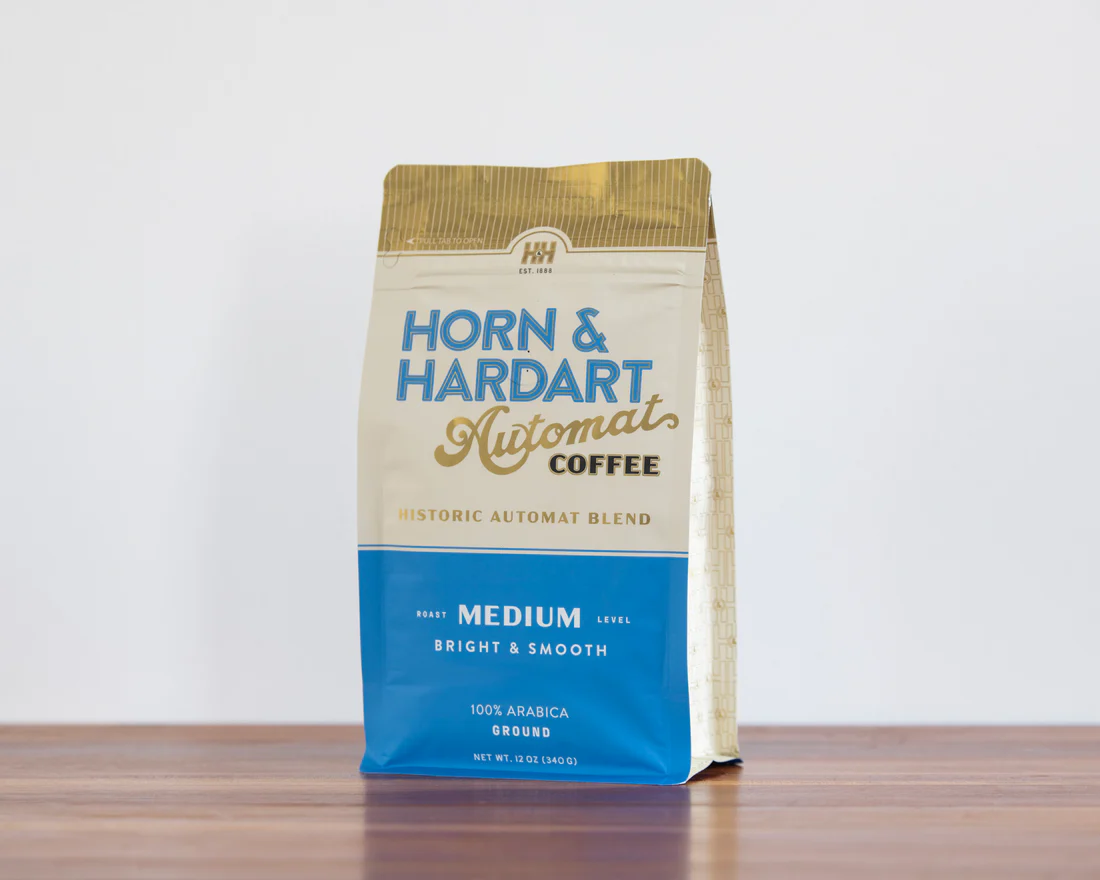
Coffee · Dark Roast
Horn & Hardart Dark Roast
A richer, bolder option for customers who prefer a deeper roasted character.
Shop Dark RoastMake It a Gift Experience
A Gift Built Around the Automat
Pair Horn & Hardart coffee with a few small details and it becomes an experience.
You don't have to rebuild the Automat.
You only need enough pieces to open the door to the story.
Horn & Hardart Coffee
Automat history card
Vintage nickel-style menu card
Automat coffee-break recipe
Vintage diner-style coffee cup
Custom occasion story