 Product Stories
American Food History · Pennsylvania Traditions
The Pink Pudding That Came to Your Door
How a traveling salesman, an old-fashioned dessert mix, and Harold Moyer turned a rosy bowl of tapioca into a Pennsylvania memory.
Before groceries could be ordered from a phone and delivered within hours, certain household products arrived in a far more personal way.
There was a knock at the door.
Outside might be a familiar salesman carrying extracts, spices, medicines, cleaners, baking supplies, and pantry goods. He did not simply leave a box on the porch. He brought the store with him.
Among the items remembered from those traveling sales routes was a dessert that stood apart from ordinary chocolate, vanilla, and lemon pudding.
It was tapioca.
And it was pink.

From Town to Town
The Store on Wheels
The story begins with the Furst-McNess Company, founded in Freeport, Illinois, in 1908.
McNess household products were sold door-to-door by representatives traveling through towns and rural communities. In the early years, some routes were covered by horse and buggy.
As automobiles became more common, the buggy gave way to a vehicle filled with household goods—a store on wheels that carried familiar products directly to the customer.
The representative could answer questions, suggest something new, and remember which products a family ordered on his previous visit.
Before Online Ordering
A Different Kind of Delivery
Door-to-door selling was built on familiarity, conversation, and the trust that developed when the same person returned along the same route.
A Familiar Knock
The person standing at the door was often someone the family already recognized from earlier visits.
The Pantry Was Checked
Families considered which staples were running low and which familiar products they wanted again.
Something New
The salesman introduced new flavors and household products through conversation rather than a screen.
A Story Remained
The product was carried inside, but the memory of the visit often stayed with the family.
A Bowl That Stood Apart
The Pudding People Remembered
Tapioca pudding was already an old-fashioned comfort food: milk, sweetness, and small tapioca pearls cooked until the mixture became creamy and thick.
But pink tapioca was different.
Its rosy color made it instantly recognizable. Set beside a bowl of ordinary vanilla pudding, it looked cheerful, unexpected, and made for a special occasion.
Children remembered the color. Adults remembered the texture. Families remembered who prepared it and where it appeared.
It was not elaborate food. That was part of its charm. It was familiar enough to be comforting and unusual enough to begin a conversation.

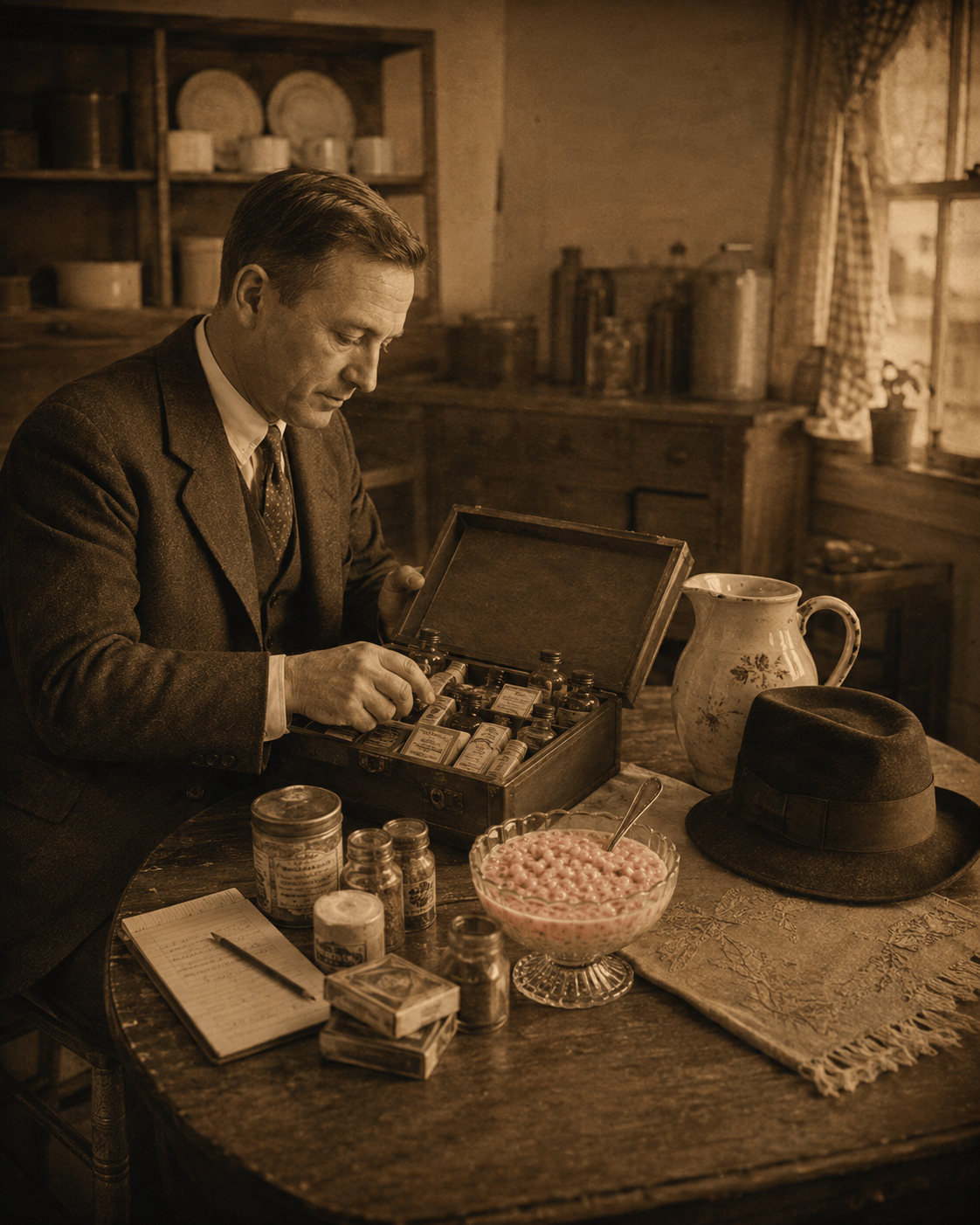
The Man Behind the Pudding
Harold Moyer and a Local Tradition
In southeastern Pennsylvania, the story of pink tapioca became closely connected to Harold B. Moyer of the Harleysville and Souderton area.
Harold worked for many years as a truck and bus driver. He also sold McNess products, continuing the company’s tradition of bringing household goods directly to customers.
But one detail became part of his local identity: Harold Moyer was known for making his pink tapioca pudding.
People may forget the ordinary details of a meal, but they remember the person who always brought the special dish.
He sold McNess products from door to door. What people remembered was the pink pudding.
Prepared and Shared
A Dessert Made for the Table
Pink tapioca was meant to be prepared, spooned into dishes, and served to family, friends, or an entire community table.
The pudding had to be prepared, allowed to thicken, and spooned into individual bowls. It invited the cook to make enough for the family, enough for company, or enough to take along to a gathering.
A bowl might appear after Sunday dinner. It could be carried into a fellowship hall or placed among pies, cakes, gelatin desserts, and other homemade favorites.
It was inexpensive enough for an everyday meal but colorful enough to feel festive.
The small tapioca pearls gave it a texture unlike ordinary pudding. Some people loved that texture immediately. Others needed a little convincing.
Almost everyone remembered it.
The Detail Everyone Noticed
Why Pink Mattered
The pink color did not make the pudding more complicated. It made it more memorable.
Food traditions are often preserved through small details: the shape of a jar, the design on a package, the sound of a wrapper, the scent of an extract, or the color of a pudding.
Pink tapioca could be recognized from across the room. Before anyone asked who had made it, the answer may already have been understood.
“That is Moyer’s.”
How Food Traditions Survive
A Recipe Passed Through Memory
Not every food tradition survives in a formal cookbook. Some remain because one person keeps making the dish and someone else keeps asking for it.
Someone remembers the package.
Someone remembers the salesman.
Someone remembers the pudding at a family gathering.
Together, those memories rebuild the story.
People are not only searching for a dessert. They are searching for a time, a place, and a person they associate with it.

Shopping Was Personal
The Dessert at the Door
The story of Moyer’s Pink Tapioca belongs to a time when the person delivering a product might later see you at church, pass you on the road, or remember your family’s order the next time he came through town.
That kind of commerce created stories ordinary retail rarely could.
A pudding mix was sold. A recipe was prepared. The color caught people’s attention. Eventually, the dessert became part of his name.
A Story Worth Serving Again
A Pennsylvania Memory
Moyer’s Pink Tapioca Dessert brings back more than the flavor of an old-fashioned pudding.
It recalls the traveling McNess salesman and his store on wheels. It recalls products chosen at the kitchen door, desserts prepared for a crowd, and recipes that became connected to the people who made them.
Most of all, it recalls Harold Moyer—the local McNess seller who became known for a pudding unlike any other.
The pink color may be what first catches your attention. The story is what stays with you.
Taste the Story
Bring the Pink Pudding Home
Prepare it for a holiday, carry it to a community gathering, or serve it simply because someone remembers the pink pudding that once arrived by way of the McNess salesman.
Pudding · Pennsylvania · Americana
Moyer’s Pink Tapioca Dessert
An old-fashioned pink tapioca dessert connected to the McNess door-to-door tradition and the local memory of Harold Moyer.
Every Gift With a Story purchase includes:
- The product’s historical story
- Background on the people behind it
- A custom occasion story at no additional charge
The People Behind the Products
Meet the Makers Behind the Story
The products in this story come from American makers with histories worth knowing.

Meet the Maker
Partner – Moyer’s Pink Tapioca Pudding
Discover the maker, history, and products behind this part of the story.
Meet the Maker →Shop the Story
Gifts Featuring Moyers Pink Tapioca Pudding
Bring the story home with gifts built around the makers and flavors featured above.

Gift With a Story