American Food History · Diners & the Roaring Twenties
The 1920s Diner
The counter that never closed—where coffee, malted drinks, pie, soda, and everyday American life met on the same row of stools.
The American diner was never simply a place to eat. It was a bright, familiar stop where workers, travelers, families, shopkeepers, and night-shift customers could share the same counter.
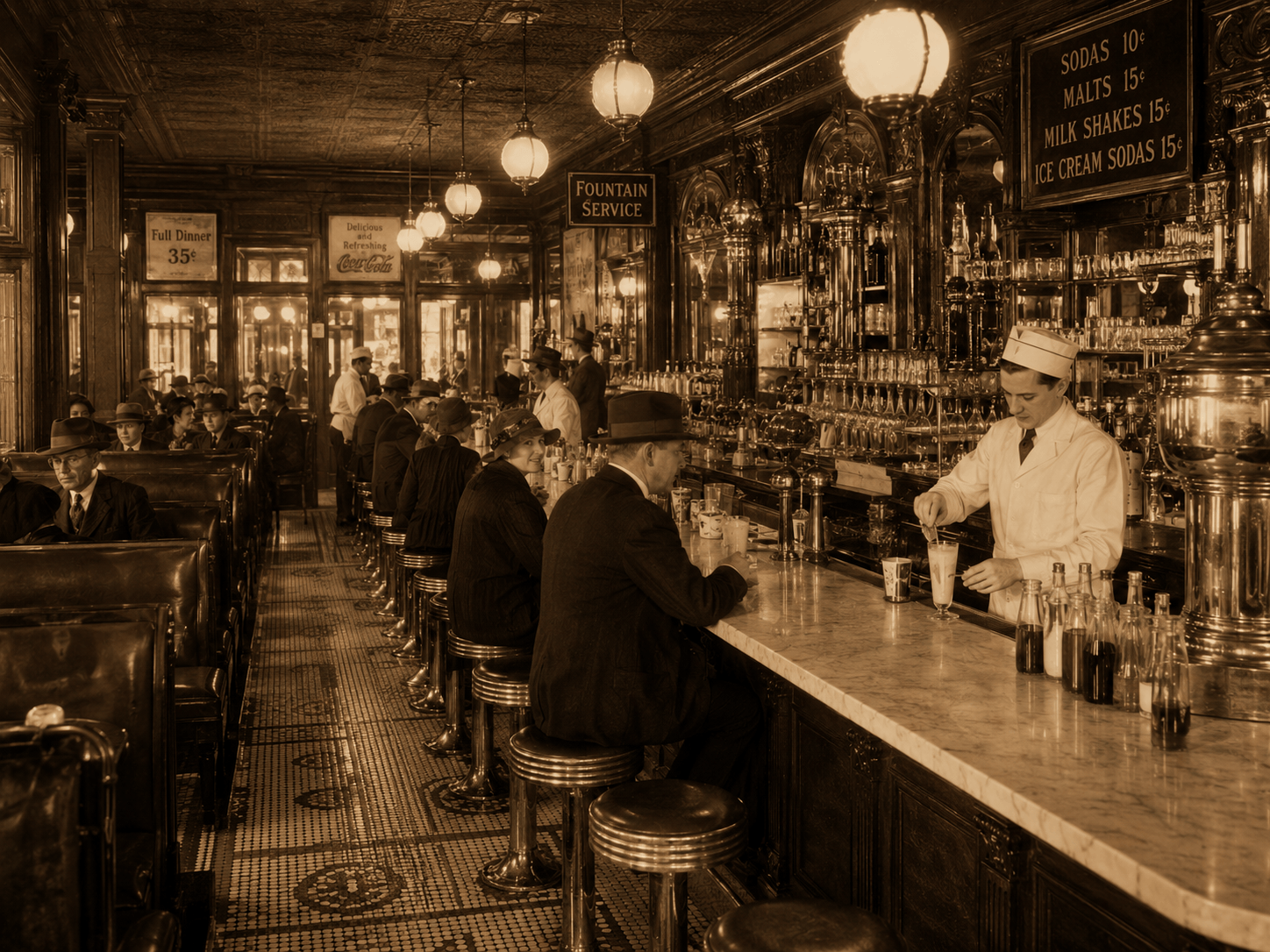
No password was required. Just take a stool, order a cup of coffee, and stay awhile.
The American diner was never simply a place to eat. During the 1920s, it was a bright, familiar stop where factory workers, travelers, families, shopkeepers, and night-shift customers could share the same counter.
Coffee was usually ready before the customer sat down. Pie waited beneath a glass cover, the soda fountain stayed busy, and the person behind the counter knew how to keep an order moving without making anyone feel rushed.
At a time when much of American life was changing, the diner offered something dependable: an affordable meal, a warm cup, and a seat among neighbors and strangers.
From Wagon to Roadside Icon
A Brief History of the American Diner
The diner evolved from late-night lunch wagons into one of the most recognizable gathering places along American roads and Main Streets.
Lunch Wagons
Mobile lunch wagons served workers and travelers after ordinary restaurants had closed for the evening.
Permanent Counters
Many lunch wagons developed into permanent buildings, often designed to resemble railroad dining cars.
The Fountain Years
Coffee, pie, bottled soda, malted drinks, and quick meals became familiar parts of American counter service.
Virginia Diner
Virginia Diner began serving travelers from a converted railroad dining car in Wakefield, Virginia.
A Roadside Tradition
Diners developed into the chrome, neon, and stainless-steel roadside landmarks remembered today.
Step Inside
A Seat at the Counter
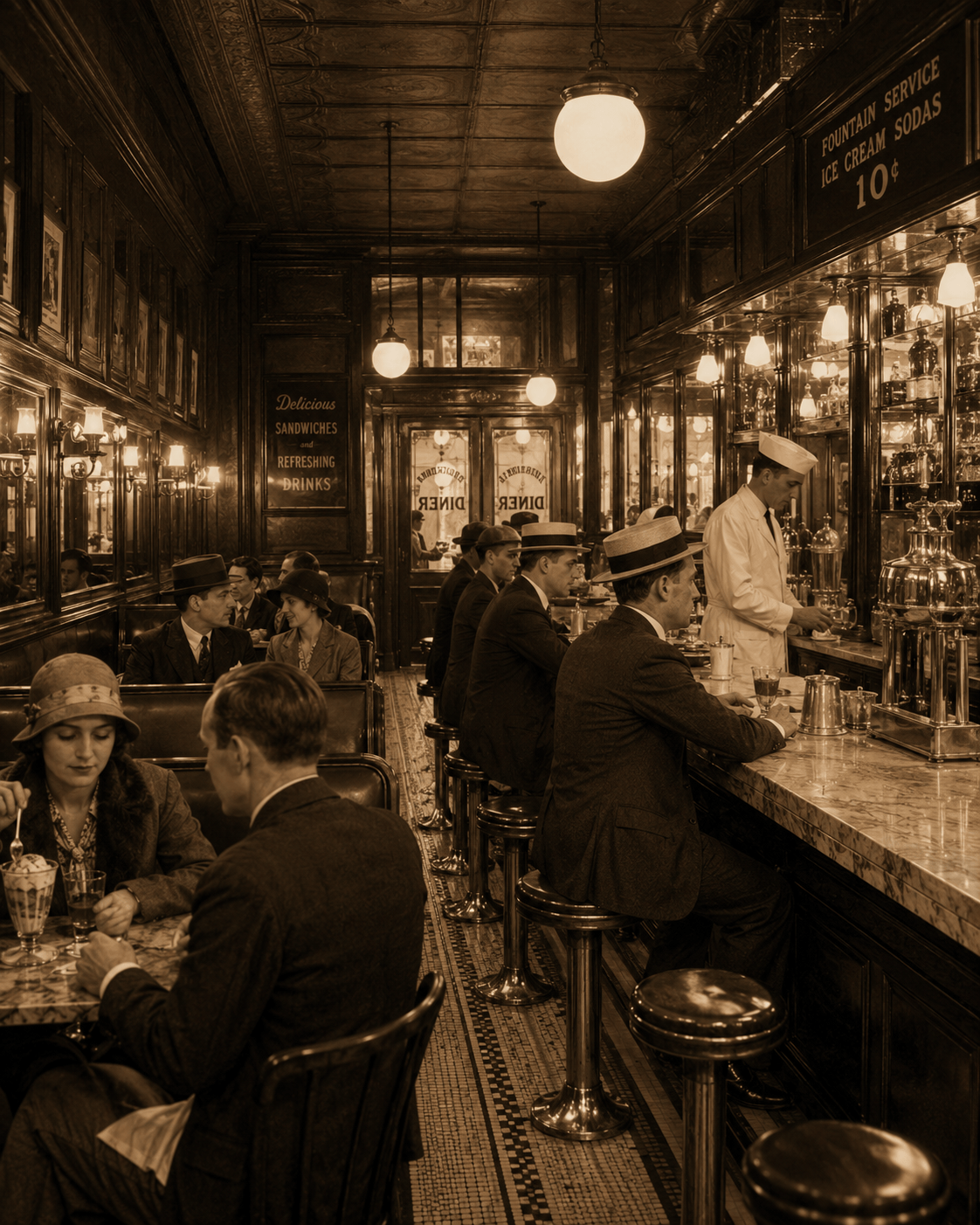
The bell above the door announces another customer. Behind the counter, coffee is already brewing and a row of heavy mugs waits beside the machine.
A soda jerk works the fountain handles, mixing syrups, soda water, milk, cocoa, and malt into drinks that are part refreshment and part performance.
Near the register are peanuts, wrapped candies, and small treats meant to be enjoyed immediately or carried along for the road.
Nothing about the diner was especially formal, and that was part of its appeal. The counter belonged to everyone.
Found Along the Lunch Counter
Four Flavors of the American Diner
Coffee, cocoa, malt, soda, and small counter treats helped define the flavor of the American diner.
Where Coffee Met Cocoa
The diner mocha brought two counter favorites together: strong coffee and rich cocoa. Milk softened the bitterness, while a little malt could give the drink a toasted, old-fashioned sweetness.
The Ingredient Behind the Fountain
Malted milk added a creamy, toasted flavor to fountain drinks. Blended with milk, chocolate, coffee, or ice cream, it created something richer than an ordinary shake.
Showmanship Behind the Counter
The soda fountain was part kitchen, part laboratory, and part stage. The person behind it measured syrups, pulled fountain handles, mixed drinks, and kept customers entertained while the counter stayed busy.
A Railroad Car and a Virginia Tradition
Virginia Diner began in 1929 inside a converted railroad dining car in Wakefield, Virginia, where travelers stopped for a meal and discovered the large, crisp Virginia peanuts served along the way.

The Diner Mocha
Warm, Familiar, and Filling
It was not a fussy café creation. It was the kind of drink that belonged beside a slice of pie or a late breakfast.
Strong coffee and rich cocoa formed the base. Milk softened the cup, while a little malt could give it the toasted sweetness associated with the old fountain counter.
Malted Milk
The Ingredient Behind the Fountain
Malted milk became closely associated with soda fountains and lunch counters, where drinks were mixed to order and served in tall glasses or heavy diner cups.
Blended with milk, chocolate, coffee, or ice cream, malt added a creamy, toasted richness that made an ordinary drink feel like something from the fountain.


The Soda Jerk
Showmanship Behind the Counter
The soda fountain was part kitchen, part laboratory, and part stage.
The person working behind it measured syrups, pulled fountain handles, mixed drinks, and kept customers entertained while the counter stayed busy.
The nickname “soda jerk” came from the quick jerking motion used to operate the handles on an old soda fountain.
Reading Soda Works carries that old-fashioned soda tradition forward through distinctive bottled flavors made for modern counters, celebrations, and gift sets.
Virginia Diner Peanuts · Established 1929
A Railroad Car, a Roadside Stop, and a Virginia Tradition
Virginia Diner began in 1929 inside a converted railroad dining car in Wakefield, Virginia.
Travelers stopped for a meal and discovered the large, crisp Virginia peanuts served along the way.
The peanuts became more than a counter snack. Customers began carrying them home and sending them to friends, helping turn a regional specialty into a lasting American gift tradition.


American Life During Prohibition
Bright Lights During the Dry Years
While speakeasies operated behind closed doors, the diner remained visible, affordable, and open to nearly everyone.
It offered an evening gathering place without the secrecy of an illegal bar.
Counter Service · Served All Day
A Classic Diner Order
Good food, hot coffee, something sweet, and no password needed.
The Diner Mocha
A rich combination of coffee, cocoa, milk, and a touch of malt.
Old-Fashioned Soda
A distinctive bottled soda inspired by the flavors of the American fountain.
Peanuts and Candy
Virginia peanuts and nostalgic sweets for sharing, snacking, or carrying home.
Something Sweet
A slice of pie, a bit of candy, or another warm drink before heading back out.
An American Counter Worth Remembering
The Diner Lives On
The 1920s diner helped make the lunch counter part of everyday American life.
It was quick without feeling anonymous, affordable without pretending to be formal, and social without requiring an invitation.
What mattered was not only what was served, but how ordinary the ritual became: walk in, take a seat, order something familiar, and share the counter with whoever happened to be there.
The diner made a small stop feel like part of American life.
The People Behind the Products
Meet the Makers Behind the Story
The products in this story come from American makers with histories worth knowing.

Meet the Maker
Horn and Hardart
The coffee that helped fuel one of America’s most unforgettable dining institutions.
Meet the Maker →
Meet the Maker
Portland Syrups
Discover the maker, history, and products behind this part of the story.
Meet the Maker →
Meet the Maker
Reading Soda Works
Discover the maker, history, and products behind this part of the story.
Meet the Maker →
Meet the Maker
Virginia Diner
Discover the maker, history, and products behind this part of the story.
Meet the Maker →Shop the Story
Gifts Featuring These Makers
Bring the story home with gifts built around the makers and flavors featured above.

Gift With a Story
Cooks Flavor Club

Gift With a Story
The Automat Coffee Break
Gift With a Story
The Coffeehouse Contraband Collection
Gift With a Story
American Soda Fountain Club
Monthly Club
Keep the Story Coming
Discover a monthly club featuring These Makers and enjoy another chapter delivered to the door.
For Campus
Send a Little Story to Campus
Find These Makers inside a collegiate gift made for care packages, study breaks, and a taste of home.
Gift With a Story
The Collegiate Survival Parcel
Gift With a Story · Collegiate Care Department A Little Piece of Home,Built for College Life. Not a box of…
From the Product Stories Desk
Continue Reading
The American Soda Fountain
Where fizz, flavor, ice cream, and conversation turned an ordinary counter into one of America’s favorite gathering places.
The Candy That Never Went Underground
The sweeter side of American life during the dry years.
The Pink Pudding That Came to Your Door
A Pennsylvania pantry story remembered one pink bowl at a time.
Give More Than a Gift
Take a Stool. Pour the Coffee. Share the Story.
The American diner turned an ordinary counter into a place for coffee, conversation, roadside tradition, and everyday American life.