 Product Stories
American Food History · The Prohibition Years
The Candy That Never Went Underground
How candy counters, pocket-sized treats, and a new generation of American candy bars brought a little sweetness to the dry years.
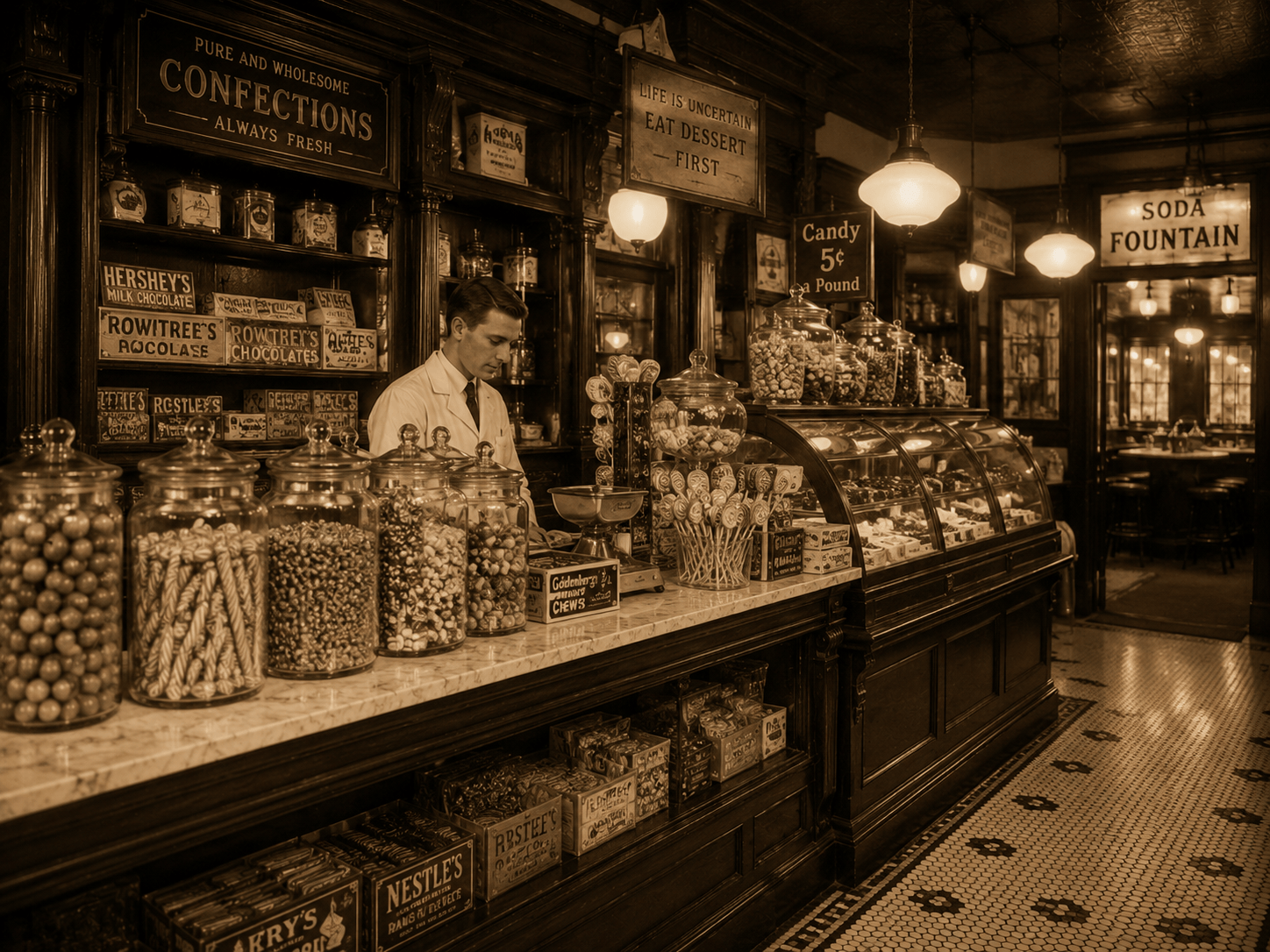
When Prohibition took effect in 1920, bottles disappeared behind unmarked doors, passwords were whispered, and illegal drinks were served out of sight. Candy, however, stayed right where everyone could see it.
It waited in glass jars at the general store, beside the register at the neighborhood market, and behind the counter at the local soda fountain.
Candy bars slipped easily into lunch pails and coat pockets. Taffy could be broken and shared. Hard candy lasted through a train ride, a ballgame, or a long afternoon at work.
During an era remembered for everything Americans were told they could not have, candy remained a small and affordable pleasure that required no password, disguise, or secret knock.
An Affordable Pleasure
The Everyday Indulgence
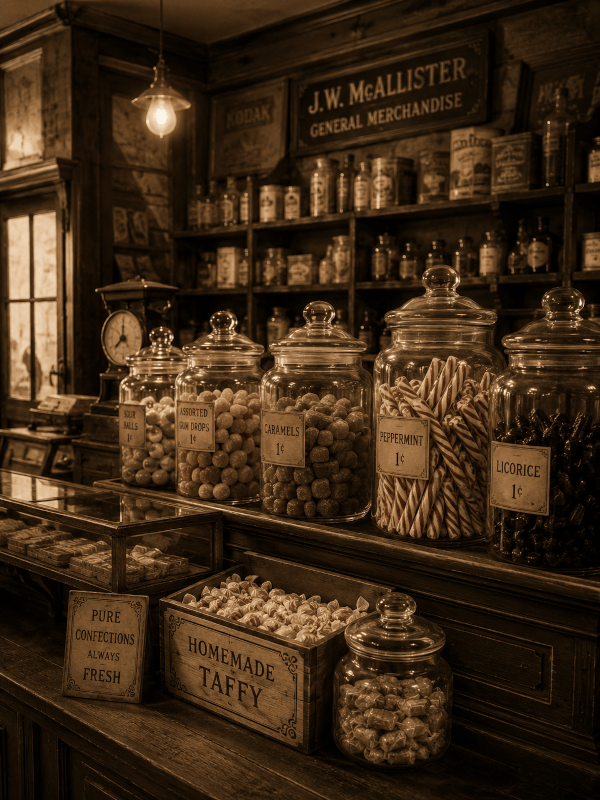
Candy was not reserved for holidays or elaborate celebrations. It belonged to everyday American life.
Children studied the choices inside glass counter jars. Factory workers carried candy bars in their lunch pails. Travelers picked up something sweet for the road.
At drugstores and soda fountains, candy shared the counter with coffee, bottled soda, ice cream, and malted drinks.
Modern packaging helped transform candy into something portable, recognizable, and easy to sell. Before long, bright wrappers and familiar names filled counters across the country.
A Counter Full of History
American Candy Through the Dry Years
Some of these treats were already American favorites when Prohibition began. Others arrived during the Roaring Twenties and the difficult years that followed.
NECCO Wafers
Thin, pastel candy wafers became a recognizable American treat that was easy to store, carry, and share.
Good & Plenty
The familiar pink-and-white candy shells brought a colorful appearance to black licorice.
Circus Peanuts
Soft banana-flavored marshmallow candies became one of the most unusual sights in the old candy jar.
Barnum’s Animal Crackers
Circus-themed boxes transformed an ordinary animal-shaped cracker into a small experience.
Bonomo Turkish Taffy
Chill it, smack it, unwrap the broken pieces, and pass them around.
Clark Bar
A crisp peanut-butter center covered in chocolate made it a substantial counter favorite.
Goldenberg’s Peanut Chews
Roasted peanuts, dark molasses, and chocolate created a Pennsylvania candy with a flavor all its own.
Mounds
Dark chocolate and sweet coconut arrived at the beginning of the Prohibition era.
Zero Bar
Caramel, peanuts, almond nougat, and a pale coating helped it stand apart from darker chocolate bars.
Baby Ruth
Peanuts, caramel, and chocolate made it filling enough for work and indulgent enough for the ballpark.
Charleston Chew
Chocolate-covered nougat became a candy meant to be stretched, frozen, snapped, and shared.
Abba-Zaba
Chewy taffy wrapped around a peanut-butter center created an unmistakable combination of textures.
Milk Duds
Chocolate-coated caramel pieces turned an imperfect shape into a memorable name.
Zagnut
Peanut butter, toasted coconut, and crisp texture created a bar that needed no chocolate coating.
PayDay
Caramel and salted peanuts created a sweet, substantial bar during the final years of Prohibition.
Older American Favorites
Born Before Prohibition
Not every candy associated with the 1920s was created during the decade. Many of the most familiar counter-jar sweets had already been enjoyed for years.
Horehound drops carried the bittersweet flavor of an older American candy tradition. Butterscotch offered something smooth, buttery, and slow to disappear.
Licorice, wafers, taffy, marshmallow candies, and animal crackers connected the modern candy counter to the general stores and confectioners that came before it.
A customer could choose a candy rooted in the nineteenth century or reach for something that had only recently come off the production line.
From the General Store Jar
Old Favorites
- Horehound drops
- Butterscotch candies
- Licorice
- Candy wafers
- Taffy
- Circus peanuts
- Animal crackers
 Portable
Sweet
Affordable
Portable
Sweet
Affordable
Wrapped and Ready
The Candy Bar Comes of Age
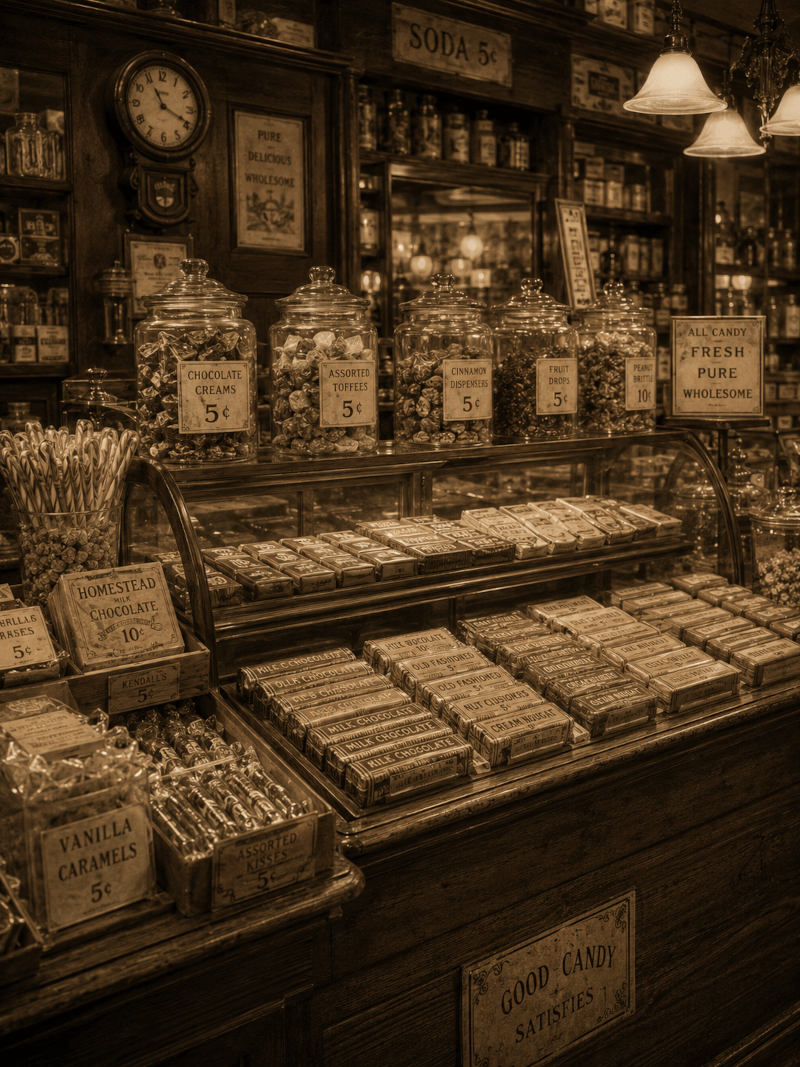
The candy bar was particularly suited to the pace of the 1920s. It was wrapped, portable, affordable, and ready to eat.
It could be sold from a drugstore, newsstand, lunch counter, train station, general store, or vending machine. It could travel in a school bag or work coat without requiring a plate or spoon.
Manufacturers experimented with chocolate, caramel, coconut, peanuts, molasses, nougat, and crisp centers. A wrapper gave each combination its own name and personality.
The flavors mattered, but so did the rituals: unwrapping, breaking, sharing, saving a piece for later, and choosing a favorite from a crowded display.
Candy at the Ballpark
Passed Across the Grandstand
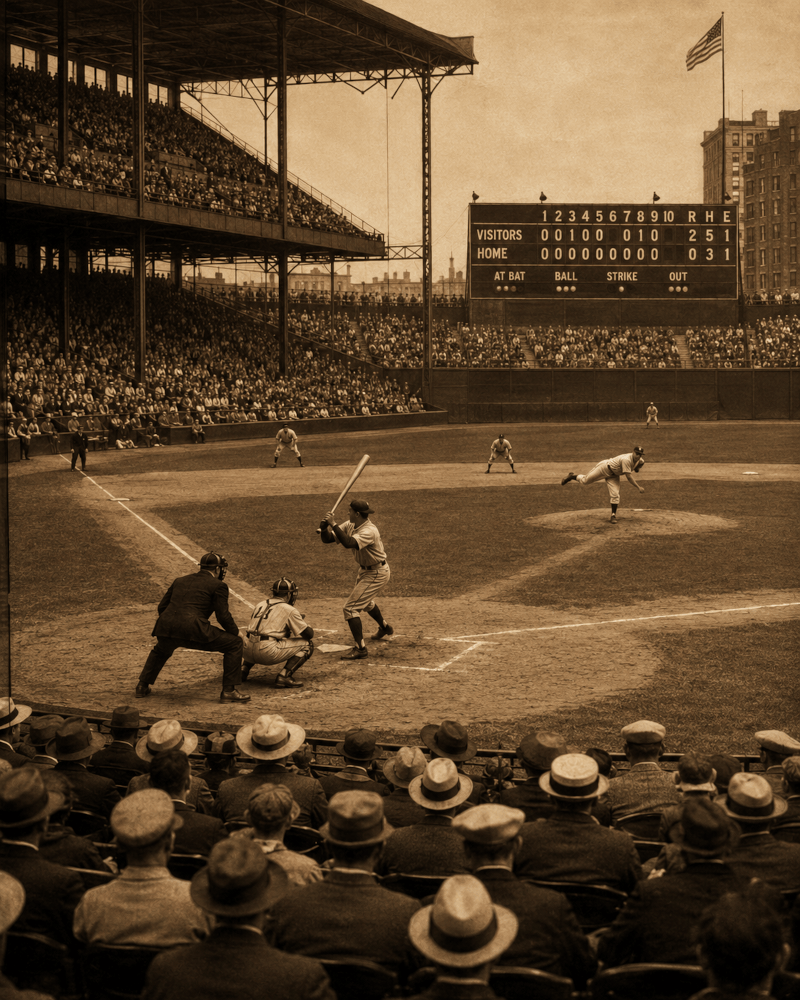
Some sweets became inseparable from the places where Americans gathered. Cracker Jack combined caramel-coated popcorn and peanuts with the excitement of baseball, carnivals, and the surprise hidden inside the box.
At the ballpark, a treat needed to be easy to carry and easy to pass from one person to the next. Caramel popcorn, peanuts, candy bars, and wrapped sweets fit naturally into the experience.
The crack of the bat and the rustle of a candy wrapper became part of the same memory.
Choosing Something Sweet
A Paper Sack from the General Store
Before there were endless supermarket aisles, buying candy often involved making a choice at the counter.
A glass jar might hold bright wafers, hard candies, licorice pieces, peanut-shaped marshmallows, or something wrapped in waxed paper.
The shopkeeper measured a small amount, folded it into a paper sack, and passed it across the counter.
What Would You Choose?
That little moment of choosing is one reason nostalgic candy remains so powerful. The flavor may bring back a specific kitchen, store, grandparent, holiday, or afternoon. Even the wrapper can carry a memory.
Open to Everyone
No Secret Knock Required
During Prohibition, the speakeasy and the candy counter existed in two very different worlds.
One was concealed behind locked doors, false walls, and carefully guarded entrances. The other stood in plain sight beneath bright lights.
The speakeasy offered secrecy and risk. The candy counter offered familiarity. It welcomed children, families, travelers, workers, and anyone with a few coins to spare.
The speakeasy kept its bottles hidden. The candy store kept its jars in the window.
A Lasting American Tradition
The Candy That Stayed With Us
Many foods disappear when tastes change. These candies did not.
Some survived Prohibition, the Great Depression, wartime shortages, new competitors, and generations of changing packaging.
Their recipes may have shifted and their manufacturers may have changed, but their names, shapes, and flavors remain recognizable.
A roll of wafers connects one generation to another.
A chewy bar recalls the way it was frozen and snapped.
A box of caramel corn brings back the ballpark.
A paper sack recreates the general-store counter.
One bite can spark a memory. One wrapper can begin a conversation. Sometimes the sweetest pieces of the past are the ones worth sharing again.
Taste the Story
Bring Home the Candy Counter
Our nostalgic candy collections bring together classic American sweets inspired by general stores, ballparks, soda fountains, lunch counters, and the Prohibition years.
Each gift includes the history behind the featured treats and a custom occasion story at no additional charge.
Candy · Soda · Americana
Sugarfoot’s Sweet Contraband
A lively collection of nostalgic candy and old-fashioned soda inspired by the treats that stayed in plain sight during the dry years.
$00.00
View the Gift SetClassic Candy · Prohibition
The Bootleg Candy Company
Classic American candy packed with a playful Prohibition twist, as though the sweetest shipment in town arrived through the back door.
$00.00
View the Gift SetCandy · Drinks · American History
Ultimate Prohibition Contraband
A larger collection of American-made foods, nostalgic sweets, drinks, and stories gathered into one memorable gift.
$00.00
View the Collection